


Infinite Gacha Fever
4.752.00 Reviews
App Specs
- Version
- 1.0.9
- Updated On
- License
- Free
- Downloads
- 100,000+
- Developer
- BKP Global
- Categories
- Casual
- Platform
- Android
Screenshots
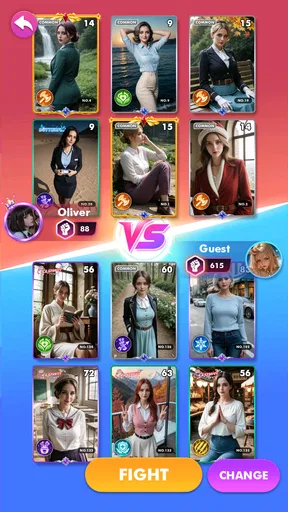
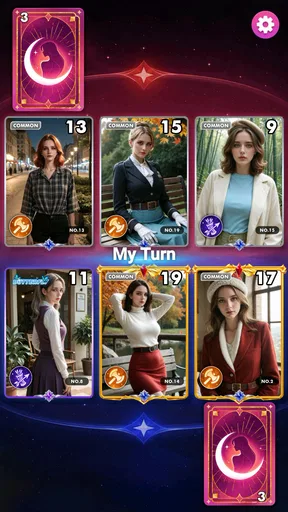
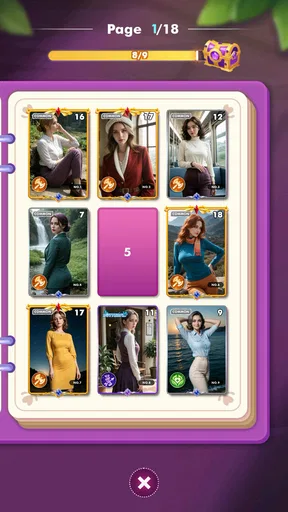
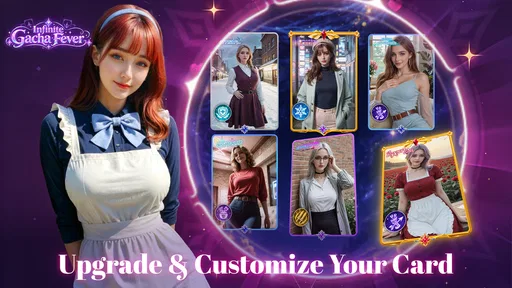

 Analysis by AppCompare
I went into Infinite Gacha Fever expecting a light anime-themed collecting game, and that is broadly what I found: a casual TCG experience built around the excitement of obtaining illustrated goddess characters. It is free to start, easy to understand, and aimed at players who enjoy short sessions, collection progress, and the anticipation of the next reveal more than complex strategy.
What makes it worth discussing is not simply the theme. The important question is how comfortable the game feels during repeated play: whether its presentation keeps the pace moving, whether longer collecting sessions become tiring, and whether the free structure feels reasonable for the kind of player you are. My overall impression is positive, but it comes with a clear condition: this is best approached as a relaxed collection game, not as a deep competitive card game that will satisfy everyone.
How the collecting loop feels in everyday play
The appeal is immediate. You open the game, look through its anime-inspired presentation, and focus on building a personal collection of goddess characters. That simple objective gives the game a clear identity. I did not need a long explanation to understand why I was playing: each session is about seeing what comes next and deciding how much attention I want to give the collection.
That makes it a natural fit for small breaks. I can imagine opening it while waiting for an appointment, during a commute with a stable connection, or at the end of the day when I want something more engaging than scrolling but less demanding than a long role-playing game. The casual format helps because it does not ask me to learn an elaborate control scheme before I can enjoy the central idea.
At the same time, the gacha focus is also the game’s biggest point of friction. The pleasure comes from uncertainty, so the experience can feel exciting one moment and repetitive the next. Players who enjoy collecting illustrated characters will probably accept that rhythm. Players who want direct control over every reward may find the loop less satisfying, especially when progress depends more on patience and repeated attempts than on individual skill.
The most useful mindset is to treat each session as a small collection check-in rather than a race to complete everything. That approach makes the free entry point feel more comfortable and reduces the temptation to turn every disappointing result into a reason to spend. It also suits the casual category better than trying to play it like a full-time competitive card title.
What feels quick and what may slow the rhythm
For a game built around repeated collecting, perceived speed matters as much as visual style. The core appeal loses some of its charm if every attempt feels like a long interruption. In my experience, the game is easiest to enjoy when I keep sessions focused: open it with a specific goal, check the available collection activity, and leave once that small goal is complete.
Worth Reading Before You Choose

EA SPORTS FC Mobile 26 Is a Bigger Football Game, but It Takes Time

Flipboard Shows What News Apps Must Do Beyond the Feed

Switching to Android Auto Means Rethinking Your Driving Routine

Google Calendar Makes a Crowded Week Easier to Manage

Ludo King Makes the Most of the Minutes Between Plans

Baby Panda World Brings Quick Play to Modern Phones, but Its Game Library Feels Busy
That workflow is more comfortable than opening the game without a plan and repeatedly chasing the next result. The latter can make any gacha title feel slower, even when the individual actions are simple. A short, deliberate routine also helps me notice whether I am genuinely enjoying the artwork and progression or merely continuing out of habit.
I would not describe this as a game that requires a powerful gaming phone simply because it belongs to the casual category. Still, the overall feel will depend on the device, available storage, background activity, and connection quality. Those are ordinary practical factors, but they matter more in a game where the reward sequence is supposed to feel immediate. If the phone is already struggling with other apps, the experience may feel less polished than it does on a clean, responsive device.
One useful habit is to close demanding apps before a longer session and avoid judging the game during a moment when the phone is overheating or busy with downloads. That does not change the game itself, but it gives a fairer impression of its responsiveness. It also helps separate a device problem from a game problem, which is especially useful when deciding whether to keep playing.
Longer sessions and resource pressure
The game is more convincing as a short-session title than as something I would leave open for hours. Repeated collecting naturally encourages “one more try” behavior, and that can turn a relaxed game into a surprisingly long session. The longer I play, the more important it becomes to watch battery comfort, device temperature, and my own spending decisions rather than focusing only on the next character.
I would be cautious about assuming that a casual label means zero resource demand. Anime artwork, animated presentation, account activity, and network-dependent actions can all feel heavier than a basic offline puzzle. I cannot responsibly promise identical performance across every phone, so my advice is practical: start with short sessions, observe battery behavior on your own device, and adjust expectations before committing to extended play.
There is also a mental resource to consider. Collection games can fill a phone with unfinished goals, especially when the game presents many characters or repeated chances to obtain them. I found it more enjoyable to choose a collection target and ignore distractions that do not support it. This is a small but important trade-off: focusing on a personal objective makes the game feel more purposeful, while trying to pursue everything at once can make progress feel scattered.
For players who want a game that can run quietly in the background of a busy day, this may not be the ideal choice. Its appeal depends on actively checking results and engaging with the collection loop. For someone who wants a compact visual hobby during breaks, that same requirement is a strength rather than a weakness.
Stability, recovery, and the practical side of play
Reliability is not only about whether an app opens. In a collecting game, I also care about what happens when a session is interrupted, the connection changes, or I need to leave suddenly. A good routine is to avoid starting a valuable-looking sequence when I know I am about to switch networks or close the app. That is sensible behavior for any online-style collection experience, and it prevents avoidable frustration.
I also recommend keeping the game updated. The current version is 1.0.9, so it is still sensible to think of the experience as one that may continue receiving adjustments. Updating can be particularly important for a title whose smoothness depends on the interaction between the game, the operating system, and the device. I would not treat the version number as a promise of flawless performance, but it is a useful detail when troubleshooting: first check that the installed version is current, then restart the app before assuming a deeper problem.
If the game ever feels unusually slow, my recovery order would be simple. I would close it completely, reopen it, check the connection, and make sure the phone has enough free space for normal operation. If the issue appears only after a long session, I would also let the device cool down. These steps are not hidden features, but they are realistic ways to protect the experience when a casual game becomes less responsive than expected.
Another sensible boundary is to avoid spending during a moment of technical uncertainty. The game is free, but its optional purchases range from $1.99 to $129.99 per item. That wide range makes personal limits especially important. I would first confirm that the game is behaving normally, decide what the collection is worth to me, and only then consider any purchase. A temporary connection or performance problem is never a good reason to hurry into a transaction.
Who will enjoy the pace and who should skip it
I think this game is a good match for anime art fans who enjoy character collecting without wanting a complicated control system. It also suits people who like opening a game for a few minutes, making a little progress, and returning later. The free starting point lowers the barrier to trying it, while the Teen content rating gives families and younger players a reason to check whether the tone is appropriate before installing.
The game is less suitable for someone looking for a traditional strategy card game with deep deck construction, carefully balanced matches, or a strong sense that personal decisions determine every outcome. The TCG label may attract that audience, but the collecting focus is the part that stands out most to me. If your favorite card games are about tactical turns and outplaying an opponent, a more strategy-centered alternative will probably be a better use of your time.
I would also skip it if random rewards are stressful rather than exciting. The central loop depends on anticipation, and that can be uncomfortable for players who prefer transparent progression. Likewise, anyone trying to avoid all in-app purchases should approach with a firm plan, because the free price does not remove the pressure that can accompany optional spending in a gacha game.
On the other hand, people who enjoy building themed collections may find more value here than they would in a generic casual game. The goddess artwork gives the collecting goal a recognizable personality, and that visual identity is likely to matter more than raw complexity. I would recommend trying it without spending first, then deciding whether the collection itself keeps you interested.
How it compares with familiar casual alternatives
Compared with a match-three game, this title offers less moment-to-moment puzzle solving and more anticipation around collection results. A match-three alternative is usually better when I want direct control, quick tactical decisions, and a clear sense that every move affects the outcome. Infinite Gacha Fever is better when I want the reveal and the character catalogue to be the main source of satisfaction.
Compared with an idle collector, it feels more personal because the anime goddess theme gives the collection a specific visual direction. An idle game may be more convenient for passive progress, while this game asks me to return and take part in the collecting process. That difference matters for people who want a game to do most of the work automatically versus those who enjoy checking in and making the next attempt themselves.
Compared with a large role-playing game, the advantage here is commitment. I do not need to prepare for a long quest or remember a complicated story before beginning a short session. The trade-off is depth: a larger RPG will generally offer more exploration, character development, and strategic variety. I would choose this game for a compact collection habit, not as a replacement for a full adventure.
The result is a fairly clear position in the casual market. It is not trying to be every kind of game at once. Its strongest reason to exist is the combination of anime presentation, goddess collecting, and a low-friction free start. Its weakest point is that the same collection structure may feel repetitive or financially tempting if I play without limits.
Device fit, age guidance, and spending boundaries
The minimum operating-system requirement is Android 6.0, which makes the potential device range broad. That does not guarantee the same speed or stability on every compatible phone, so I would still consider the age and condition of the device. A phone that handles ordinary games comfortably should be a more sensible starting point than an older handset already struggling with storage or background tasks.
Because the game is rated Teen, I would not hand it to a child without checking the experience and setting purchase protections first. The free label can be misleading if a shared device has payment methods available. I would treat the game as free to try, not as automatically free of spending pressure. That distinction is important for families and for anyone who prefers a completely controlled entertainment budget.
My practical approach would be to play for several sessions before buying anything. During that time, I would ask three questions: Do I enjoy the artwork even when the result is not exciting? Do I feel comfortable with the pace of collection? Am I choosing to continue, or am I only reacting to the possibility of a better result? If the answers are positive, a small optional purchase may feel reasonable. If not, spending more is unlikely to fix the underlying mismatch.
The developer is BKP Global, and the game has reached over one hundred thousand installs with a 4.7 average from around two thousand eight hundred ratings. Those figures suggest that the concept has found an audience, but they should not replace personal testing. A popular collection game can still be the wrong fit for someone who dislikes random rewards or needs a highly strategic card experience.
My performance verdict after weighing the trade-offs
Infinite Gacha Fever works best when I use it as a lightweight anime collection game with controlled expectations. Its casual structure makes it approachable, the character-focused theme gives it a clear identity, and the free entry point makes trying it straightforward. I also appreciate that it can fit into short breaks rather than demanding the kind of time commitment associated with a large RPG.
The limitations are equally clear. The repeated-reward rhythm will not satisfy everyone, and longer sessions may make battery, heat, connection, and attention more noticeable on some devices. The purchase range also means I would not recommend playing without a spending boundary. None of those points automatically disqualifies the game, but they do determine who is likely to enjoy it.
My recommendation is simple: install it if you like anime character collections, want a casual TCG-flavored experience, and are comfortable treating gacha results as entertainment rather than a guarantee. Start free, keep sessions measured, and judge the game by how much you enjoy the collection itself. If you want direct tactical control, deep card strategy, or a completely predictable progression path, choose a different casual game instead.
For the right player, this is an easy game to dip into and a pleasant way to turn a few spare minutes into collection progress. For everyone else, the attractive artwork may not be enough to overcome the uncertainty at the heart of the loop. That balance is why I see it as a worthwhile try, but not a universal recommendation.
Pros
- Quick gacha pulls make short play sessions easy to enjoy.
- Large character variety encourages collecting and experimenting.
- Frequent rewards help maintain progress without long grinding sessions.
- Simple controls make the game accessible to casual players.
- Stylized visuals give the roster a distinctive and colorful look.
Cons
- Random pulls can make obtaining specific characters frustrating.
- Progress may slow noticeably after the early stages.
- Repeated animations can become tedious during extended sessions.
- Some upgrades may encourage spending on premium currency.
- The interface can feel crowded with currencies and event menus.
FAQs for Infinite Gacha Fever
What is Infinite Gacha Fever, and how does the gameplay work?
Infinite Gacha Fever is a collection-focused gacha game built around summoning characters, items, or other rewards and improving your team over time. After downloading it, players typically complete stages, claim resources, perform draws, and use duplicate or unwanted rewards to strengthen their roster. Progress combines luck, resource management, upgrades, and repeated play, so it is best suited to users who enjoy gradual collection and optimization.
Is Infinite Gacha Fever free to download and play?
The game can generally be downloaded and started without an upfront purchase, but free-to-play access may be supported by advertisements, optional in-app purchases, or both. Paid offers can provide extra summons, currency, boosts, or convenience items, although spending should not be necessary to understand the basic gameplay. Before installing, check the store listing for the current pricing, age rating, and purchase information available in your region.
Does Infinite Gacha Fever require an internet connection?
An internet connection may be needed for important functions such as loading advertisements, synchronizing progress, receiving events, validating purchases, or accessing online rewards. Some basic sections could work temporarily offline, but offline availability can vary by device and game version. Players should not assume that all progress will be saved without connectivity, particularly when switching devices or reinstalling the application.
Is Infinite Gacha Fever suitable for children?
Suitability depends on the store rating, the game’s presentation, advertising, and the presence of random-reward mechanics. Because gacha systems can encourage repeated draws and may include optional purchases, parents should review the permissions, content rating, privacy details, and payment settings before allowing a child to play. Enabling parental controls and requiring purchase authentication is recommended for younger users.
What should I check before downloading Infinite Gacha Fever?
Before downloading, confirm that your Android or iOS device meets the required operating-system version and has enough free storage for the installation and future updates. It is also worth checking recent user reviews, developer information, privacy permissions, account or cloud-save requirements, and whether the game is officially available in your country. If you plan to spend money, review the refund and purchase policies first.


